This is decision support, not legal advice. It reflects the legislation and official EU implementation material available on 29 October 2026. Territorial scope, role allocation, classification and national-law interaction are fact-specific.
The company is outside the EU. The activity may not be
Imagine a UK software company with no European Union office. It sells a recruitment-ranking application to a Belgian employer. The application is hosted in Britain and supported from London. A second EU customer sends candidate data to the same company, which runs its own AI scoring process and returns a ranked shortlist. A Polish distributor then asks to offer a white-labelled version under the distributor’s brand.
Those arrangements touch the Union in different ways. One puts a system on the EU market. One keeps processing outside the Union but returns output to an EU organisation. One creates a supply-chain question about importer, distributor and provider status. The company’s place of incorporation matters, but it does not answer any of them.
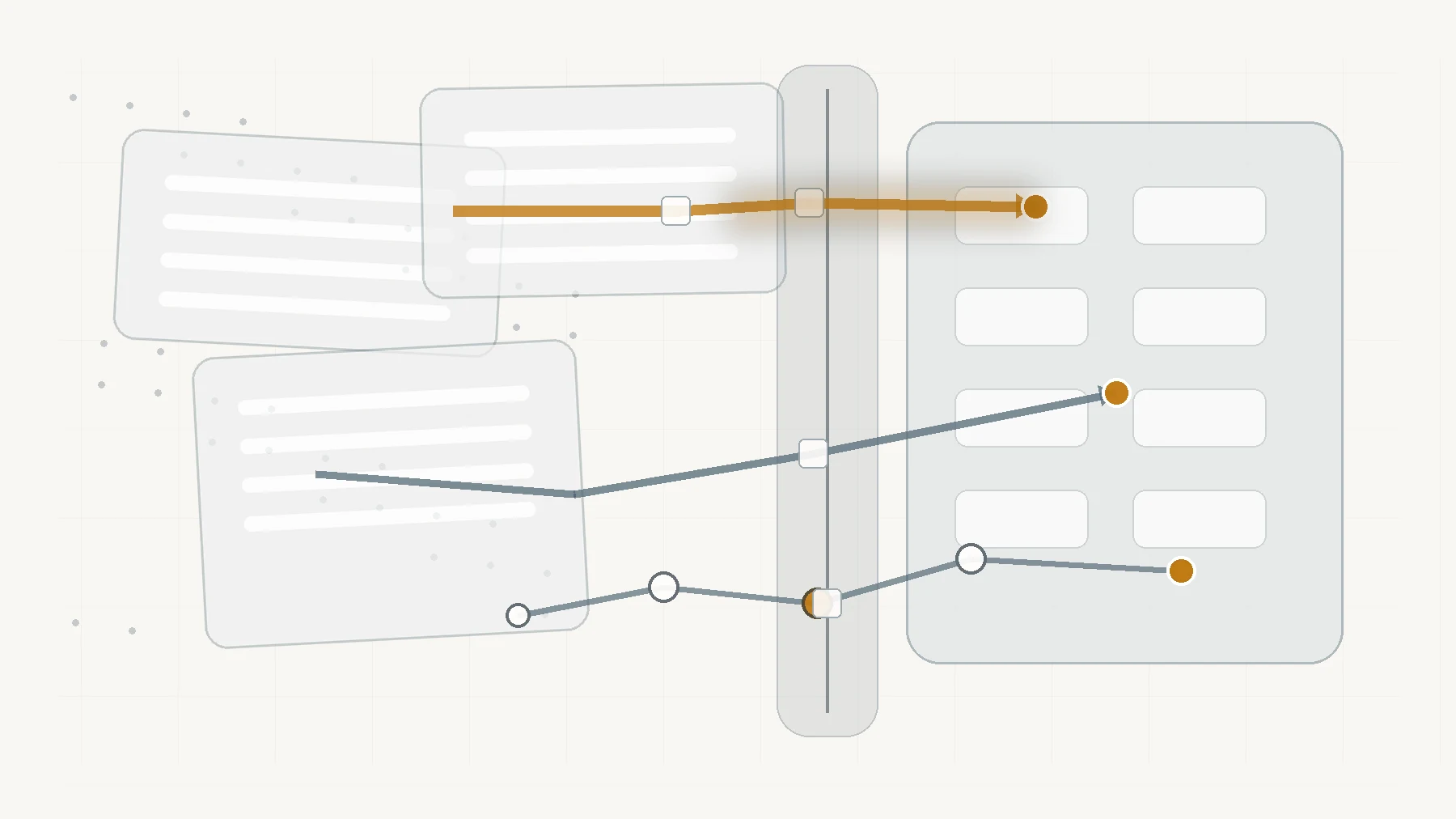
The useful first question is not simply, “Are we an EU business?” It is: “Which EU connection are we relying on—market, output or value chain—and which legal entity occupies which role?”
The Act follows the activity, not the passport
Article 2 applies to providers that place AI systems or general-purpose AI models on the Union market, regardless of whether the provider is established in the EU or a third country. It also reaches providers and deployers outside the EU where the output produced by an AI system is used in the Union. Importers, distributors, product manufacturers and authorised representatives are separately identified within the perimeter. 3
Recital 22 explains the anti-circumvention logic. An EU operator can contract an activity to a third-country operator, send data abroad for AI processing and receive the resulting output back into the Union. The processing may never occur inside the EU, but the output route can still matter. 4
This does not make every globally accessible website or every AI-assisted document that reaches an EU inbox equivalent. Intent, authority, purposeful supply, foreseeable use and control still matter. The Commission’s Article 50 guidance says incidental, unforeseeable or unauthorised downstream use should not alone trigger those transparency duties for a third-country provider whose system has not otherwise been placed on the EU market or put into service there. 6
Three routes into scope
On a narrow screen, each route is shown as a separate card.
| Route | What crosses the boundary | Management test |
|---|---|---|
| 1. Market | An AI system or general-purpose model is purposefully supplied for distribution or use on the Union market. Paid and free supply can count. | Document contracts, onboarding, trials, distribution, intended EU use, access controls and who controls the offer. |
| 2. Output | A provider or deployer outside the EU produces AI-system output that is intended for, and used in, the Union. | Identify the EU recipient or audience, the authorised workflow, the entity producing the output and how use is controlled. |
| 3. Value chain | An EU importer, distributor, product manufacturer or authorised representative sits between the foreign supplier and the market. | Map role definitions, written mandates, branding, modifications, evidence flows and authority contacts. |
These routes are a territorial triage, not a final compliance conclusion. Role, use, risk category and application date still determine the duty.
Route one: the system or model enters the EU market
“Placing on the market” is the first making available of an AI system or general-purpose model on the Union market. “Making available” includes supply in the course of a commercial activity whether paid or free. A pilot, free tier or developer release is not automatically outside the concept merely because no invoice is issued. 5
For a non-EU SaaS company, relevant facts may include direct EU contracts, onboarding aimed at EU users, an EU launch or support channel, an importer or distributor, intended-use statements and the supplier’s control over access and terms. No single fact is a universal test. The task is to examine purposeful supply rather than rely on server location or corporate address.
Model and system must also be separated. Chapter V governs providers of general-purpose AI models. The rules for AI systems depend more heavily on system purpose and context. A model provider that integrates its model into its own marketed AI system may also be placing the model on the market, subject to the Act’s limited internal-use conditions. 7
Route two: the output comes back into the Union
A non-EU organisation can fall within scope as a provider or deployer where an AI system’s output is used in the EU. This matters to overseas business-process providers, analytics firms, recruitment services, marketing agencies, claims processors, risk specialists and professional-service teams.
A Singapore service provider applying AI to EU insurance claims and returning recommendations to an EU insurer may create an output-use question. So may a US agency creating a deepfake advertisement for an EU campaign, or an overseas analytics team returning employee-scoring output to an EU employer.
The route should not be overstated. Article 2 says output “used” in the Union, while Recital 22 refers to output “intended” for EU use. The Commission’s transparency guidance adds a practical boundary: foreseeable dissemination and authorised use matter; content reaching an EU audience through unforeseeable channels outside the deployer’s control does not create the same position. 6
The output route concerns providers and deployers of AI systems. General-purpose model-provider duties are principally connected to placing the model on the Union market. Do not collapse the model and system layers into one category.
Route three: the value chain carries duties back to the supplier
A non-EU supplier may work through an EU importer, distributor, product manufacturer or authorised representative. Those actors have their own functions and, for high-risk systems, their own verification, information and cooperation duties. They need evidence from the foreign provider before they can perform their jobs. 910
The names are not interchangeable. An importer places a foreign-branded system on the Union market. A distributor makes a system available further along the supply chain. A product manufacturer may place an AI system on the market with its product and under its own name. An authorised representative acts under a written mandate and is a regulatory contact; it is not a substitute provider or insurer against the provider’s failures.
Role can also move along the chain. For high-risk systems, Article 25 can cause a distributor, importer, deployer or other third party to be treated as the provider when it puts its name or trademark on the system, substantially modifies it, or changes its intended purpose so that a previously non-high-risk system becomes high-risk. White-labelling, fine-tuning, integration and repurposing therefore need role analysis, not a reassuring contract clause. 11
Map legal entities, not logos
An EU subsidiary may be the deployer of a system supplied by its non-EU parent. The parent may be a provider, an overseas deployer producing output, or neither for a particular use. A distributor may occupy a different role from a sister company that modifies the product. The existence of an EU subsidiary does not automatically make every parent-company AI activity subject to the Act; nor does it automatically absorb the parent’s duties.
Contracts help allocate work, access and remedies, but role definitions depend on what the parties actually do. Calling an EU partner a “reseller” does not stop it being an importer. Calling the customer the “sole deployer” does not prevent the foreign developer being a provider. A contract cannot erase duties imposed by law.
A multinational group therefore needs two connected maps: a legal-entity and role map, and a system and output-flow map. Without both, it can neither explain why a use is outside scope nor identify the evidence needed when it is inside.
Scope is not the same as an immediate obligation
A system can fall within territorial scope without every possible obligation applying today. The next questions are what is being supplied or used, which role the organisation occupies, which risk or transparency category is engaged and which date governs it.
On a narrow screen, each obligation family is shown as a separate card.
| Situation | Position on 29 October 2026 | Practical implication |
|---|---|---|
| GPAI model placed on the EU market | Chapter V provider duties have applied since 2 August 2025; AI Office enforcement is active. | Assess provider status, documentation, copyright and training-content-summary duties, systemic-risk rules and the Article 54 representative requirement. |
| Interactive or generative system within Article 50 | Transparency obligations apply from 2 August 2026. | Build user notification, machine-readable marking or deployer disclosure into the system and distribution chain where the relevant paragraph applies. |
| Annex III high-risk system | Main Chapter III requirements apply from 2 December 2027. | Use the preparation period to settle classification, roles, evidence, conformity, importer and representative arrangements. |
| Annex I product-embedded high-risk AI | Main high-risk requirements apply from 2 August 2028. | Integrate AI Act work with product safety, conformity assessment, technical documentation and release planning. |
| Other legal and contractual duties | Data protection, employment, consumer, product, IP, security and sectoral rules apply according to their own terms. | A later AI Act date is not permission to ignore existing duties. |
A later deadline is a preparation window, not an exemption. The highest-value work now is reversible and evidence-building: inventory systems and models, classify the EU connection, assign roles, preserve intended-purpose statements, obtain supplier documentation and repair contracts.
An authorised representative is not outsourced liability
The phrase can give false comfort. It sounds as though a non-EU business can hire an EU firm and transfer the problem. The provider remains responsible for its own obligations; the representative performs tasks defined in a written mandate and acts as a contact for authorities.
For a third-country provider of a general-purpose AI model, Article 54 requires an EU-established authorised representative before the model is placed on the Union market. The representative verifies that required technical documentation has been drawn up, keeps specified records, supplies information and cooperates with the AI Office. A limited exception exists for qualifying free and open-source models, but not for models with systemic risk. 8
For non-EU providers of high-risk AI systems, Article 22 creates a separate regime. Its operational timing follows the relevant high-risk date. Planning should begin earlier because the representative and importer need access to evidence that cannot be created at the last minute. 912
Contracts become the first compliance surface
For many non-EU businesses, the first serious encounter with the Act will be a customer questionnaire, tender condition, distributor negotiation, due-diligence request or contract schedule. The correct response is not a blanket promise that a product is “EU AI Act compliant”. A useful contract records the assumptions that make the allocation intelligible:
the legal entities and their expected roles;
whether the relationship relies on EU market placement, output use, or both;
the system, model, intended purpose, supported uses and prohibited uses;
who controls configuration, fine-tuning, integration, branding and changes of intended purpose;
which documentation, instructions, logs, model information and limitations will be supplied;
who implements Article 50 notification, marking and disclosure features;
incident, corrective-action, authority-enquiry and change-notification support; and
what happens if a later classification, interpretation or product change alters the role map.
The near-term risk is often not a headline fine. It is delayed revenue, warranties the supplier cannot safely give, duplicated assurance work, or a distribution partner that will not carry an undocumented product.
Meeting-ready artefact: the non-EU AI Act reach test
Use this for an initial legal, product, procurement, sales or governance discussion. It exposes missing facts and assigns work; it is not a substitute for a system-specific legal conclusion.
On a narrow screen, each question is shown as a separate card.
| Question | Evidence to look for | Escalate when |
|---|---|---|
| 1. Which legal entity is doing what? | Supplier, developer, contracting entity, system operator, EU customer, subsidiary and distribution partner. | The analysis uses a brand or group name rather than named legal entities. |
| 2. What crosses the boundary? | AI system, GPAI model, AI-enabled product, service, data, recommendation, score, generated content or other output. | The team says “our AI” without separating model, system, product and service. |
| 3. Is there purposeful EU market supply? | EU contracts, onboarding, distribution, support, intended-use statements, trials, free tiers and access controls. | The conclusion rests only on server location or global website access. |
| 4. Is output intended for EU use? | Named recipient or audience, service specification, workflow destination, authorisation and foreseeable dissemination. | Output reaches the EU but no one can explain whether that was intended, controlled or incidental. |
| 5. Which operator role applies? | Provider, deployer, importer, distributor, product manufacturer and authorised-representative facts. | The contract label conflicts with who develops, brands, supplies, modifies or controls use. |
| 6. Has branding or modification shifted provider status? | White-labelling, fine-tuning, substantial modification, integration and change of intended purpose. | A partner puts its own name on the system or a modification changes the risk profile. |
| 7. Which obligation family is engaged? | Prohibited practice, Article 50, GPAI provider, Annex III or Annex I. | The project is called “AI Act compliance” without an article-level rationale. |
| 8. Which date applies? | 2 August 2025 GPAI; 2 August 2026 transparency; 2 December 2027 Annex III; 2 August 2028 Annex I. | A later high-risk date is used to postpone a current transparency or model-provider duty. |
| 9. Who is the EU interface? | Importer, distributor, product manufacturer, authorised representative, customer and authority contact. | The same partner is casually described as importer, distributor and representative. |
| 10. What evidence and ownership exist? | Classification memo, intended purpose, technical material, instructions, logs, contracts, change control, owner and review date. | The supplier offers assurance language but cannot produce documents, boundaries or named owners. |
What non-EU businesses should not do
Do not assume that no EU office means no exposure. Market supply and intended EU output can be enough to require analysis.
Do not classify the whole group once. Roles and duties attach to specific entities, models, systems, products and uses.
Do not let contract labels override operational facts. A reseller may be an importer; a customer may become a provider after rebranding or substantial modification.
Do not appoint a generic “EU representative”. Identify whether the mandate concerns a GPAI model, a high-risk system or another legal regime.
Do not assume the importer absorbs every provider duty. Its verification work increases the need for supplier evidence.
Do not wait for 2027 or 2028 to repair the information chain. Classification, intended-purpose records, change control and contracts take time.
Do not treat open source as a universal exemption. The GPAI exceptions are limited and do not apply to models with systemic risk.
Do not treat a globally accessible service as automatically in or out. Document intended market, foreseeable use, access, contracts and control.
The Act may cross the border before the company does
The right response is neither to build a global compliance programme around every AI feature nor to wait for a Brussels office that may never exist. It is to identify the three routes, map the legal entities and roles, separate models from systems and services, and match each workstream to the correct date.
That creates a more defensible commercial position. Sales teams know which assurances they can give. EU customers know which evidence to request. Product teams know whether Article 50, GPAI, Annex III or Annex I is the relevant lane. Representatives and importers know what they are being asked to hold and verify.
The first sentence in the next meeting should be simple: “Which EU connection are we relying on—market, output or value chain?” Until that is answered, “in scope” and “out of scope” are conclusions without a map.
The AI Act may cross the border before the company does. Good governance should do the same.
Primary sources and legal references
- Regulation (EU) 2024/1689 — Artificial Intelligence Act, Official Journal.
- Regulation (EU) 2026/1744 — Digital Omnibus on AI, Official Journal.
- AI Act Service Desk, Article 2: Scope.
- AI Act Service Desk, Recital 22: third-country output intended for use in the Union.
- AI Act Service Desk, Article 3: Definitions.
- European Commission, Guidelines on Article 50 transparency obligations, 20 July 2026.
- European Commission, General-Purpose AI Models in the AI Act: Questions & Answers.
- AI Act Service Desk, Article 54: Authorised representatives of GPAI model providers.
- AI Act Service Desk, Article 22: Authorised representatives of high-risk AI providers.
- AI Act Service Desk, Article 23: Obligations of importers.
- AI Act Service Desk, Article 25: Responsibilities along the AI value chain.
- European Commission, “AI Omnibus enters into force”, 27 July 2026.
- European Commission, AI Act regulatory framework and implementation material, updated 19 October 2026.
Source posture: The legal dates and territorial-scope propositions were rechecked against official EU material on 29 October 2026. Service Desk summaries are explanatory rather than legally binding. The legislation, binding decisions and authoritative judicial interpretation control.